
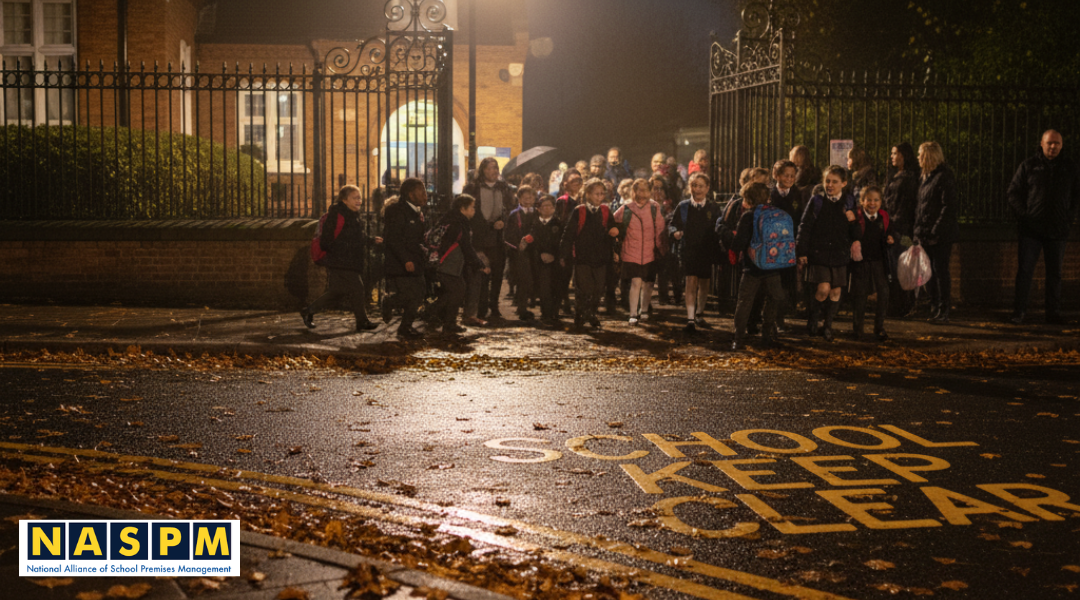
- Lighting and line of sight around paths, car parks, and entrances
- Staff and pupil safety at arrival and departure times
- Vehicle and pedestrian interactions in poorly lit car parks
- Supervision levels during after-school clubs, lettings, and cleaning routines
- Security and safeguarding, especially in larger or multi-building sites
- Events including parents evening, school plays, that can create hazards such as non-obvious trips and fall due to poor lighting and lack of risk assessing
- Fire Alarm Activation and your assembly point, the route to your assembly points and including the assembly areas must have suitable emergency lighting (refer to your FRA)
- External Lighting – Check all light fittings, timers, and sensors are working. Walk the site at dusk to spot dark patches or blind corners.
- CCTV – Ensure that your CCTV is working properly, and that the picture quality is not affected by the darkness.
- Pathways and Car Parks – Inspect for uneven surfaces, wet leaves, moss, or poor drainage. Repair or clean as necessary.
- Signage and Wayfinding – Ensure directional signs, fire exits, and emergency assembly points are visible at night.
- Access Control – Review gate locking times and staff access routes for after-hours activities.
- Supervision and Staffing – Update rotas for early or late duties, including cleaning, clubs, and site maintenance.
- Personal Safety – Remind lone workers to sign in and out, carry phones or radios, and avoid isolated areas after dark. Monitoring of your lone working staff including contractors
- Emergency Procedures – Rehearse lockdown, evacuation, and power failure scenarios during darker conditions.
- PPE – Hi-vis clothing, and also warmer uniform for extended outside working periods
- Fire assembly points and external pathway routes not having emergency lighting.
- Heating systems not maintained or tested in preparation for winter months.
- External lighting left untested until something fails.
- Car parks without marked pedestrian walkways.
- Poor visibility of CCTV footage due to glare or darkness.
- Cleaning teams working alone in unlit or unsecured areas.
- Gates or playground areas left open longer than intended.
- Test at the right time – Check lighting and visibility when it’s dark, not during the day. Review the CCTV from the previous night.
- Update risk assessments now – Note any changes in lighting, supervision, or timings. Review event specific hazards and risks.
- Communicate changes – Make staff and external users aware of new procedures for access or parking.
- Schedule maintenance early – Electricians and caretakers are busiest this time of year; plan ahead.
- Review lone worker arrangements – Ensure staff who stay late can contact help if needed.
- Have a Plan B – preparing for critical incidents such as the loss of power, services, and how the school would manage this in the short term and medium term to ensure that the school can remain open
- A Seasonal Site Safety and Lighting Risk Assessment Template
- Guidance on Lone Working Policies and After-Hours Procedures
- Email support from qualified health and safety specialists
- Training resources on Risk Assessment and Duty of Care
- Schedule a dusk walk of your site this week.
- Update your lighting and access control checks.
- Share this blog with your leadership, caretaking, and cleaning teams.
- Visit the NASPM Resource Hub for templates and guidance.