
LATEST NEWS
Keep up to date with the latest NASPM news by signing up to our newsletter

What the New Education Estates Strategy Means for School Leaders
Key Takeaways and Practical Actions The Government has published its new Education Estates Strategy: A Decade of National Renewal (February 2026), setting out a ten-year direction for the condition, safety, sustainability and resilience of school buildings across...

Why Premises Professionals Deserve Strategic Visibility Across Schools
Every day, premises professionals carry out the work that keeps schools safe, compliant and ready for learning. Their role underpins wellbeing, supports safeguarding and ensures environments are fit for pupils and staff. Yet much of this work happens quietly, often...

Why the Best Decisions Happen Before January
Budget planning for the 2026–27 school year has already begun in many schools. For senior teams and business managers, this is one of the most strategic phases of the year. For premises professionals, it is when important decisions are made about...
Implications of Ofsted’s 2025 Education‑Inspection Framework for School Premises Management
Background – How the 2025 framework differs The new Education‑Inspection Framework (EIF) announced in September 2025 applies to all school inspections in England from 10 November 2025. It replaces the four‑judgement approach and introduces a 5‑point grading scale...
Lockdown Procedures in Schools: What You Need to Know Ahead of the New Terrorism Bill
In light of the upcoming Terrorism (Protection of Premises) Bill, often referred to as Martyn’s Law, all schools in the UK will soon have new legal duties to protect pupils, staff, and visitors from potential terrorist incidents. While many schools already have fire and evacuation procedures in place, lockdown plans are often less developed or untested. This Bill is set to change that.
What Is Martyn’s Law?
The Bill, named in memory of Martyn Hett—one of the victims of the 2017 Manchester Arena attack—aims to ensure that all public venues, including schools, take proportionate steps to improve security and preparedness.
For schools, this means demonstrating that you have:
- A written lockdown procedure
- Staff who are trained and aware of what to do in an emergency
- Regular practice drills and review processes
- Clear communication plans for parents and emergency services
Further guidance will be published by the Home Office and the Department for Education (DfE) once the Bill passes, but schools should act now to review their readiness.
What Should a School Lockdown Procedure Include?
A good lockdown plan should be clear, realistic, and tested. It must cover how to:
- Initiate a lockdown – Define who has the authority to trigger it and how this will be communicated immediately to all staff (e.g. via an internal code phrase over a tannoy system, use of a specific alarm (not the fire alarm), phone groups, etc.
- Secure the site – Procedures for locking external doors, closing gates, and controlling access.
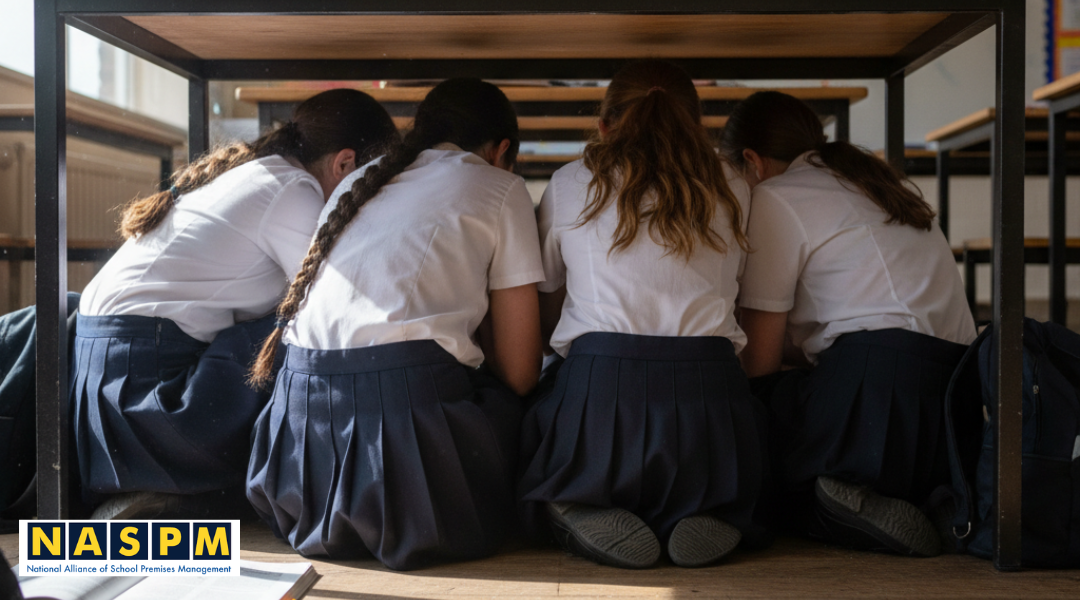
- Keep pupils and staff safe – Instructions for locking classroom doors, turning off lights, moving away from windows, and maintaining silence.
- Maintain communication – How staff and leadership will stay in contact without compromising safety.
- Liaise with emergency services – Who will make the 999 call and coordinate once police arrive.
- Manage the all-clear – How to safely end a lockdown and account for everyone.
Common Issues Found During School Lockdown Audits
Through NASPM’s support and audits of school premises, we often see:
- Schools lacking in security audits and risk assessments, this is the foundation required to ensure the school has the right controls in place.
- Plans that exist only on paper, not tailored for the school or tested in practice.
- A reluctance to test for fear of worrying pupils and staff.
- Inconsistent staff understanding, especially among temporary or lunchtime staff.
- Confusion between fire evacuation and lockdown signals.
- Weak communication channels during an emergency.
- Unable to lock certain doors, although the plan states to lock doors.
These gaps can cause confusion when every second counts.
Top Tips from NASPM Experts
- Must be workable – ensure your plan is tailored to your school.
- Keep it simple – Avoid jargon. Everyone should understand their role instantly.
- Get the communication right! Without the right communication to alert everyone that there is potential danger how can you activate the school control measures
- Drill it termly – Incorporate lockdown rehearsals into your safety calendar alongside fire drills.
- Involve everyone – Governors, business managers, and premises teams all have a part to play.
- Review annually – Especially after site changes or new building works.
- Communicate sensitively with parents – Reassure them that drills are a safety measure, not a response to immediate risk.
How NASPM Can Help
All NASPM members have access to:
- A Lockdown Procedure Template tailored for schools
- Example Risk Assessments
- A Security Audit document
- Training courses covering emergency response and compliance
Head to the website to see the resources available for you to self-serve. You simply have to register for free membership to access these resources.
Premium and our Founding Members have access to:
- Expert email advice from our qualified health and safety specialists with a 48 hour response to all queries
- A full range of Risk Assessments, Templates and Communication Plans
- Discounted training courses covering emergency response and compliance
In addition, if you’re unsure where to start, the NASPM team can review your existing plans and help you prepare for the new legislation with confidence.
Preparing for Darker Nights – Safety, Security and Risk Assessment
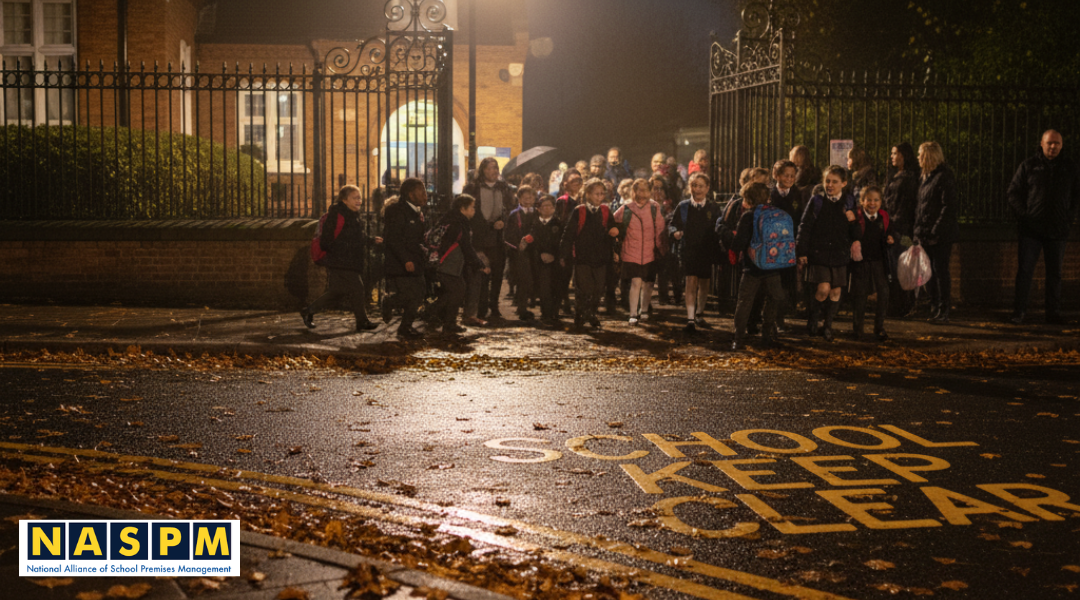
With the clocks going back, many schools find that darker mornings and afternoons bring new challenges for staff, pupils, and visitors. Reduced daylight increases the risk of slips, trips, falls, and site security issues, and it can also highlight gaps in maintenance or supervision routines that went unnoticed during summer months.
Are there significant changes to the school site due to the changes in the season with darker mornings and afternoons? Does this mean you need to reflect on your risk assessments to manage these changes.
What Risk?
When daylight reduces, so does visibility. This affects:
- Lighting and line of sight around paths, car parks, and entrances
- Staff and pupil safety at arrival and departure times
- Vehicle and pedestrian interactions in poorly lit car parks
- Supervision levels during after-school clubs, lettings, and cleaning routines
- Security and safeguarding, especially in larger or multi-building sites
- Events including parents evening, school plays, that can create hazards such as non-obvious trips and fall due to poor lighting and lack of risk assessing
- Fire Alarm Activation and your assembly point, the route to your assembly points and including the assembly areas must have suitable emergency lighting (refer to your FRA)
Even small lapses—like a broken light fitting or poorly marked kerb—can result in an avoidable accident or safeguarding concern.
Key Checks to Include in site Risk Assessment
Here’s what NASPM recommends reviewing as part of your seasonal safety audit:
- External Lighting – Check all light fittings, timers, and sensors are working. Walk the site at dusk to spot dark patches or blind corners.
- CCTV – Ensure that your CCTV is working properly, and that the picture quality is not affected by the darkness.
- Pathways and Car Parks – Inspect for uneven surfaces, wet leaves, moss, or poor drainage. Repair or clean as necessary.
- Signage and Wayfinding – Ensure directional signs, fire exits, and emergency assembly points are visible at night.
- Access Control – Review gate locking times and staff access routes for after-hours activities.
- Supervision and Staffing – Update rotas for early or late duties, including cleaning, clubs, and site maintenance.
- Personal Safety – Remind lone workers to sign in and out, carry phones or radios, and avoid isolated areas after dark. Monitoring of your lone working staff including contractors
- Emergency Procedures – Rehearse lockdown, evacuation, and power failure scenarios during darker conditions.
- PPE – Hi-vis clothing, and also warmer uniform for extended outside working periods
Common Issues We See in Schools Each Autumn
From our NASPM audits and member feedback, the same problems arise year after year:
- Fire assembly points and external pathway routes not having emergency lighting.
- Heating systems not maintained or tested in preparation for winter months.
- External lighting left untested until something fails.
- Car parks without marked pedestrian walkways.
- Poor visibility of CCTV footage due to glare or darkness.
- Cleaning teams working alone in unlit or unsecured areas.
- Gates or playground areas left open longer than intended.
A short site walk at dusk can identify most of these issues before they become incidents.
Top Tips from NASPM Experts
- Test at the right time – Check lighting and visibility when it’s dark, not during the day. Review the CCTV from the previous night.
- Update risk assessments now – Note any changes in lighting, supervision, or timings. Review event specific hazards and risks.
- Communicate changes – Make staff and external users aware of new procedures for access or parking.
- Schedule maintenance early – Electricians and caretakers are busiest this time of year; plan ahead.
- Review lone worker arrangements – Ensure staff who stay late can contact help if needed.
- Have a Plan B – preparing for critical incidents such as the loss of power, services, and how the school would manage this in the short term and medium term to ensure that the school can remain open
How NASPM Can Help
NASPM members can access:
- A Seasonal Site Safety and Lighting Risk Assessment Template
- Guidance on Lone Working Policies and After-Hours Procedures
- Email support from qualified health and safety specialists
- Training resources on Risk Assessment and Duty of Care
If you’re not yet a member, now is the perfect time to join and prepare your site for the darker months ahead.
Next Steps
- Schedule a dusk walk of your site this week.
- Update your lighting and access control checks.
- Share this blog with your leadership, caretaking, and cleaning teams.
- Visit the NASPM Resource Hub for templates and guidance.
Stay visible. Stay vigilant. Stay safe.
NASPM – helping schools protect building users and reputations all year round.

How Dangerous is Working at Height?
In 2023/24, there were 50 work-related fall-from-height fatalities in the UK, over a third of all work-related fatal injuries and a substantial increase over the previous year. Often the causes are a lack of suitable risk assessment and planning, little/no...

Let’s Stay on Top of Electrical Safety in Our Schools
Electrical safety is a vital component of health and safety management in every school. As part of their responsibilities, school leaders and premises teams must ensure that electrical systems and equipment are maintained in a safe condition and that means more than...
Could Your School Survive a Health & Safety Audit Today?
In the world of school premises management, health & safety isn’t a ‘nice to have’ – it’s a legal requirement. But with extensive legislation, stretched teams, and hectic days, even the most dedicated school staff can get caught off guard. At NASPM, we work with...

We’re Featured in Education Property Magazine
We’re thrilled to be featured in this month’s Education Property Magazine Our focus is on supporting education estates and facilities managers in driving compliance. Check out the article below on pages 38 & 39 to learn more about our mission and insights!