
- Check any photocells (or laser / radar scanners) are clear of plant material or any other debris as this can block the beam and prevent the gate from operating
- Check that the track (for a sliding gate) and opening area (swing gate) is also free of debris
- Check for any visual wear and tear around the posts / post supports and the overall construction of the gate. Assess whether the gate is running smoothly, without any jerking movements
- Check the manual release procedure and ease of manual operation. Make sure that staff (including new personnel) are aware of the recommended procedure in the event of the gate breaking down and understand how to place the gate in manual operation to enable continued safe access and exit
- Ensure the manual release key is easily accessible to all relevant staff, placing this in a key safe within easy access to the gate is recommended best practice
- Consider any changes around the gate that could impact its safe operation, for example, the installation of a new bin store near the gate which could create a crushing risk
- Check that the gate has a UKCA / CE mark this should indicate its compliance with the relevant legal requirements but does not necessarily mean the gate is safe. If the gate has been installed by a Gate Safe installer, it is likely to feature an MOT which provides a clear visual reminder of when the gate was last serviced
Easter Holidays – Make sure maintenance includes gates
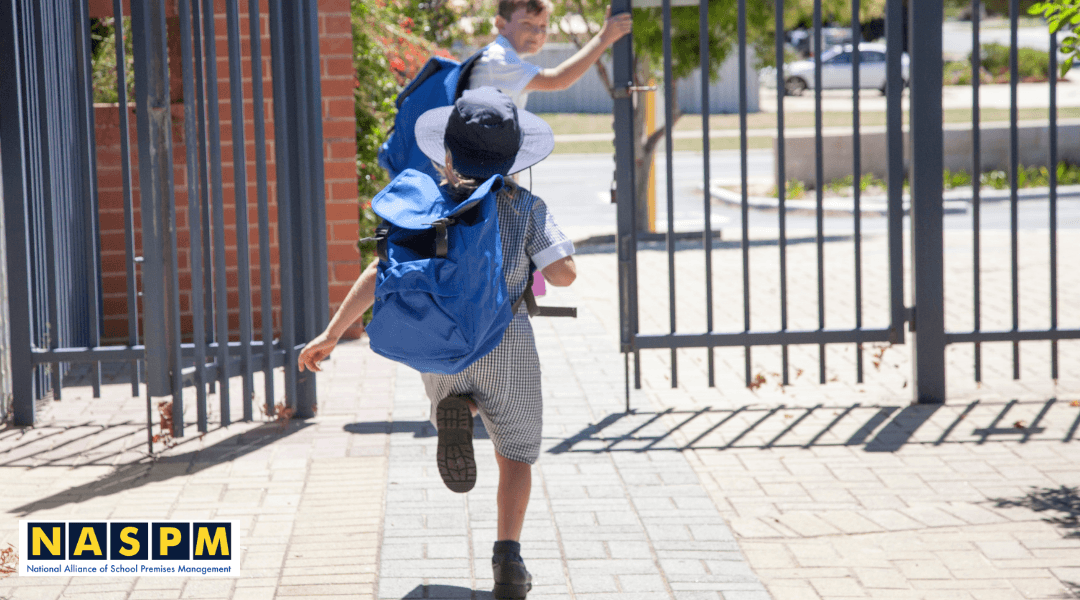
With Easter approaching, schools around the country will be preparing to capitalise on the window of opportunity to undertake necessary maintenance during the typical two-week break.
With no pupils or staff on site, improved (supposedly) weather conditions and a decent time frame, the Easter holiday represents the perfect time to schedule medium-sized jobs as part of the ongoing maintenance programme, in addition to any remedial repairs which were not possible to address during term time. For contractors working for the local authority or multi academy trust, it also enables activity across a number of sites at the same time.
Traditional maintenance might include electrical or lighting upgrades, painting and decorating, deep cleaning etc but in line with the recent New Education Estates Strategy published last month, school leaders should also acknowledge the need to utilise the Easter break to adhere to the recommendation to ensure the safety and condition of the school building and any associated outside space. This naturally should include a careful review of any automated – or manual – gates. And given the findings of Gate Safe’s snapshot survey which indicates that there could be as many as over 24,000 schools with unsafe gates in England, gate checks should be an absolute priority.
Ideally an automated gate might be due for its formal six-month maintenance service by a suitably trained engineer during the Easter period but if this is not the case, the school should still undertake its own basic checks on the gate (s) to establish the continued correct working order, condition and of course to also identify any potential new risks.
Any audit undertaken by a member of the school staff is never a replacement for the comprehensive routine maintenance undertaken by a professional, but it is important that these interim “checks” are carried out regularly to underpin the school’s commitment to safety. Such checks should also be carefully documented to provide a clear audit trail in the event of any incident involving the gate.
In-house gate reviews should cover: